Saturday, January 31, 2009


Thursday, January 29, 2009
"Can I help you with that?"
I have what appears to be the flu, but a fast version. I expect to be done with the vomiting and back in action in less than 48 hours.
Having the flu, along with never-ending travel (I don't even bother putting my suitcase away anymore. And i put EVERYTHING away) is not helping my zero free-time 2009. Side projects are suffering and in the mean time, i'm working on procuring a little something for me... Something that requires a trip to the DMV. Stay tuned; it will be excellent.
While waiting, you're probably wondering what the best rock song/video combintaion of all time might look like. It looks like this:
Crank it up fuckers.
Thursday, January 22, 2009
i'll always take the long way home
Something from a bar:
Philosopher: You know what's wrong with skanks?
Sophist: ...?
Philosopher: They don't realize how awesome i am.
Sophist: {looking around} I see what you're saying.
Philosopher: Right?
Sophist: There is an intrinsic disconnect; You are obviously rich (in terms of the setting) and awesome and they, as skanks, are obviously seeking well-off men to have meaningless sex with.
Philosopher: Right! So why don't I have skanks around me?
Sophist: {drinks jack}
Something to consider:
When the fuck did dish soap become so concentrated that a single-bastard such as myself is physically unable to obtain an amount such as to properly suds the minuscule dishes i might dirty? Seriously, the smallest possible quantity i can release, requires at least 10 minutes of rinsing. Somebody should write somebody.
Something to beware:
In this picture of the 2008 MTU ultimate team, you will see the image of a Sophist dopple ganger. I assure you, this person's pod was grown to mimic the Sophist of 2000. I shall find and destroy this pod-person.
Something:
I haven't thought about Aaron for a long time. I wonder if my memories of him will be different now.
Now is the time to make yourself into what you want to be. It won't be getting any easier.
Sunday, January 18, 2009
a few notes
A little late, perhaps, but what would the Sophist blog be without a yearly "reviews and predictions" post? (written of course for me, not you) Besides, i haven't seen a lot of robot extermination action since being kicked off the force for "getting too emotionally involved/not playing by the rules/having too many rookie partners turn up in a body-bag."
2008: Different than before.
Briefly, 2008 will always remind me of a new-used motorcycle from an old friend that opened up 4000 miles worth of highway-shaped freedom and the adventures and mis-adventures that come with it. It will smell like the Fiat, which died in the the winter of 2008, was reborn in the spring and finally sold in the summer. It was the kind of car that would only be running one out of every three times but could make me smile three out of three times. I loved it very much and it smelled wonderful.
I'll be happy to forget my fight with the law which as Stos says best, I lost the bout but beat the spread. And July and August when i lived more in Ohio than Michigan allowed me to save last year's vacation time and roll it into this year but it meant a lot of miserable hours in the plant. And then there's the 11 days in December when living in Ohio meant something completely different.
And of course there's the list of old people that don't come around anymore and the strangers that aren't so strange these days. I'm not really ready to get into it.
Finally the small stuff like Facebook, a 10yr highschool reunion, The Kids in the Hall, The Ballet Dance Recital, A Prairie Home Companion, science tattoos, Trenton Theater Gala, taking a break, Mt. Biking, Zombie invasions, a graduate certificate, motorcycle races, building an electric bicycle, nixie clocks and fancy vacuums, rochester to rochester, vagina cakes, two ski trips in two different worlds, LED flashlights, a spectacular local sushi restaurant and as always, science.
2009: Better than before.
This year, jokes about bad cop movies will continue to be funny. Also, as it started two states and one country away from home, i am declaring 2009 the year of travel. I have more time off than God this year and i'm sick like burning of my empty apartment. Also I fulfill my life long dream to race a car in a proper event. I'm not sure why i dragged my feet on this one for so long. Team Reynolds Style.
I'm glad to report that I am still utterly without knowledge of where it is i supposed to be headed, while carrying a burning desire to get there as soon as possible. I still can't go to bed at a reasonable time without worrying that i'll miss something and i'm still very good at tricking myself into believing i can do anything.
On the downside, i'm becoming more aware of the creeping spider in the back of my head whispering dispiriting webs about how time may very well be running out to achieve the more outrageous life ambitions. Could it be that i might have to give up my hopes of training for a triathlon, fighting a bear, meeting someone (again) who hasn't either been defeated by life or is gardening insufferable mental retardation, Motorcycling through Alaska, Scotland and New Zealand, marrying and divorcing a stripper, stabbing another clown, owning a Lotus Elise, or most importantly, landing the ever elusive girl on girl on girl on girl on girl on girl on girl on girl on girl on girl on girl on girl on girl on girl on girl on me on girl seventeen-some? And is it time to pursue more worthy goals? Hmmm...
Either way, this is very important: These, right now, are the good old days.
Thursday, January 15, 2009


Wednesday, January 14, 2009
actualk events based on a true story

CR
oh man
what's YOUR stripper name?
first pet name + first street name
do it.
you know you want to do it.
SOPHIST
patches reeck
CR
OH SHIT
SOPHIST
or brighteyes reeck
CR
go for the second one
tho...reeck...uh....
that's ROUGH
can i just call you brighteyes rough?
i think that works.
SOPHIST
and you?
CR
Goldy Homan
SOPHIST
i think you should be goldy reeck
i'll be brighteyes homan
CR
i don't wanna REEK
i'll by goldy rough
fair?
SOPHIST
fair
curt backwards is truc
that should be good for something
CR
oh man...
anitsirhc
that's not good for anything.
SOPHIST
patches truc?
CR
bh trumps pt
all the way
SOPHIST
bh?
pt?
CR
brighteyes homan
patches truc
try to keep up
SOPHIST
but it's not really my street
CR
so?
rough isn't even a street
SOPHIST
i smean if we;re just shooting from the hip i'd be dirk gently or girth buckingham or ted danson
CR
HAHAHAHAHAHA
OH FUCKING HELL
ok
breathing...
lush luscious, lady danger, selah sophya, tina trance
SOPHIST
that's right, breath it all in
uh
those sound like super hero names
CR
YUP
superhero stripper
or
SOPHIST
how about Tits Turrah? you could have a middle eastern theme
CR
cherry red, candy apple
OH MY GOD
Tits Turrah
fucking hell
Shauna Schwebel
Pi Puss
Alanna Vector
Nixie Nimbus : she'll take you higher
SOPHIST
i'm a big fan of what is it... alliteration?
CR
yup.
nixie nimbus is my fave so far.
SOPHIST
i'm still leaning toward tits turrah
CR
that one is hilarious...
what for you,tho...
dick dangerous might give the wrong impression
SOPHIST
cleavage cleaver
lol
yes
CR
yer a guy, not a surgical instrument.
dick dangerous, then?
SOPHIST
i meant for ou
CR
rick wragler?
SOPHIST
and dangerous = bad
CR
i KNOW
OH.
SOPHIST
drawing from pervious...
how about girth gently
CR
not true alliteration, but it's good for the nice ladies.
not for the vixens, tho.
not for the big money.
c'mon
dream a little
SOPHIST
well if the grth is that significant, you'd want... well nevermind
CR
dude.
go with it.
SOPHIST
cream a la dream
CR
but add a little spice
AHAHAHAHAHA
or simply: the goody rom
room
the goods
now presenting, The Goods
total objectification
SOPHIST
Girthy McGoods
CR
warmer...warmer...
SOPHIST
Good O'toole
*goods O'Toole
CR
THERE it is.
oh man
only if you wore a kilt
SOPHIST
adding the ethnic flair
that's where it is
i am part scottish
CR
fabulous!
SOPHIST
"they call him Night Moves. 'Cause he's got 'em)
CR
duuuuuuuuuuuuuuuuuuuude.
SOPHIST
Night Moves. Girth Gently. Goods O'Toole
i have three solid aliases
CR
alright alright alright
nixie what?
SOPHIST
Nixie Nymph
CR
nixie nymph...what was it before?
SOPHIST
Noternal Nixie
CR
nixie nimbus IS too cerebral...
keep the first name to one or two syllables.
SOPHIST
and nixie penis eater is perhaps too literal
CR
HAHAHAHAHA
oh shit
STRIPPER, NOT PORN STAR
tho...if ya wanna go there...
SOPHIST
(I thought we already were)
CR
yup.
i'm in denial.
on with the process.
scrap nixie, for now.
SOPHIST
i like the word nipples
nipply mistress
CR
LOL
LOL
SOPHIST
nipply knockers
CR
not CLASSY enough
even porn needs some CLASS
or at least WIT
besides, i'm not a dancer for jabba the hutt
SOPHIST
see, we're out of sync- i'm back to stripper names
CR
{
nipply mistress is solid
i'm just sayin
CR
DUDE.
ewie.
SOPHIST
FINE
{diggs deeper}
CR
LOLOLOLOLOL
SOPHIST
(keep in mind i'm writing a year-end self review simultaneously)
CR
HAHAHAHA
nice
i think i'm adding something very important to your writing process.
SOPHIST
probably
CR
namely: TITS
ahem.
SOPHIST
(are you blogging these later or am i
?)
CR
oh, i already sent them to jules.
you can blog, iffin' i can depend on you to do it!
SOPHIST
i'll do it
tonight or tomorrow
CR
i'll try to maintain patience.
SOPHIST
Racks O'wreck
sounds very hit
CR
oh MAN
powerhouse
you just want us both to be scottish
and i'm GERMAN
and MEXICAN
sheesh.
are you gonna blog names or try and show the process? cuz man oh man, the world needs to be hip to our genius.
SOPHIST
i was thinking list form
end product
let it speak for itself
CR
i'll leave it up to you.
SOPHIST
but i'm open to suggestions
CR
well...
as long as the names are shown, even the bad ones, maybe a few quotes.
just enough.
not too muc.
much.
i wanna find visuals, for my own entertainment.
entertainment? sheesh.
entertainment.
like....Racks O'Wreck.
what would she even LOOK like?
SOPHIST
El Melones Grandes
too literal
CR
HAHAHAHA
SOPHIST
in another language
CR
duuuuuuuuuuuuuuuude....you should post actual photos of us in a tiny corner of this post....the dorkiest we can find....
but if you wanna keep it fantasy...i'll understand.
SOPHIST
i'll put something together
CR
yeah, if yer gonna go with Spanish, make it count.
Sent at 4:27 PM on Wednesday
SOPHIST
Melones de gringos meurtos
wait
i fucked that up
CR
yeah.
but i know what yer doin.
i'm all about having tits of liberty, but only in the proper grammar.
DEATH TO WHITEY
SOPHIST
right
i just need someone that remembers how to conjegate
CR
not i, said the fly...
but WAIT
it's a STRIPPER NAME
in AMERICA
SOPHIST
right...
CR
shouldn't it be fucked up, a little bit?
SOPHIST
Melones de Gringo Muerte
CR
...that's fucken rich...but too long for a stage name...
MGM
SOPHIST
yes
CR
Tit-tacular
damn, it feels good to be a gangsta
SOPHIST
Under-bra Uber-ba
Uber Under-bra
Sent at 4:33 PM on Wednesday
CR
Helga Heels, for the fetish set.
SOPHIST
Uber Under-bra
CR
not sexy
SOPHIST
(you were offline when i tried to send that)
German isn't sexy
CR
Hilda Heels.
nope.
never has been.
frightening and powerful, but not sexy.
SOPHIST
Hilga Hiney Humper
CR
HAHAHAHA
Tits Tequila
ewie
SOPHIST
Hiney Hump-dinger
CR
Betty Bratwurst Biter
now THAT will clear the show
SOPHIST
yowser
CR
by the way, i feel like Ronald Dahl on crack and X
SOPHIST
Mescaline Minnie
Minnie Rider
CR
"i wondered if i should mention the bats"
SOPHIST
yes!
i'm now fascinated with the word hiney
hiney hands
hiney kisses
(i like that one- sounds sweet)
Sent at 4:41 PM on Wednesday
SOPHIST
if you went to live out these personas, i advise against it
unless it's Hiney Kisses
your porn stars, people:


for life
Monday, January 12, 2009
Required Reading
Patio Man and the Sprawl People
America's newest suburbs.
by David Brooks
08/12/2002, Volume 007, Issue 46
I DON'T KNOW if you've ever noticed the expression of a man who is about to buy a first-class barbecue grill. He walks into a Home Depot or Lowe's or one of the other mega hardware complexes and his eyes are glistening with a faraway visionary zeal, like one of those old prophets gazing into the promised land. His lips are parted and twitching slightly. Inside the megastore, the grills are just past the racks of affordable- house plan books, in the yard-machinery section. They are arrayed magnificently next to the vehicles that used to be known as rider mowers but are now known as lawn tractors, because to call them rider mowers doesn't really convey the steroid-enhanced M-1 tank power of the things.
The man approaches the barbecue grills and his face bears a trance-like expression, suggesting that he has cast aside all the pains and imperfections of this world and is approaching the gateway to a higher dimension. In front of him are a number of massive steel-coated reactors with names like Broilmaster P3, The Thermidor, and the Weber Genesis, because in America it seems perfectly normal to name a backyard barbecue grill after a book of the Bible.
The items in this cooking arsenal flaunt enough metal to suggest they have been hardened to survive a direct nuclear assault, and Patio Man goes from machine to machine comparing their features--the cast iron/porcelain coated cooking surfaces, the 328,000-Btu heat-generating capacities, the 1,600-degree-tolerance linings, the multiple warming racks, the lava rock containment dishes, the built-in electrical meat thermometers, and so on. Certain profound questions flow through his mind. Is a 542-square-inch grilling surface really enough, considering that he might someday get the urge to roast an uncut buffalo steak? Though the matte steel overcoat resists scratching, doesn't he want a polished steel surface on his grill so he can glance down and admire his reflection as he is performing the suburban manliness rituals, such as brushing tangy sauce on meat slabs with his right hand while clutching a beer can in an NFL foam insulator ring in his left?
Pretty soon a large salesman in an orange vest who looks like a human SUV comes up to him and says, "Howyadoin'," which is, "May I help you?" in Home Depot talk. Patio Man, who has so much lust in his heart it is all he can do to keep from climbing up on one of these machines and whooping rodeo-style with joy, manages to respond appropriately. He grunts inarticulately and nods toward the machines. Careful not to make eye contact at any point, the two manly suburban men have a brief exchange of pseudo-scientific grill argot that neither of them understands, and pretty soon Patio Man has come to the reasoned conclusion that it really does make sense to pay a little extra for a grill with V-shaped metal baffles, ceramic rods, and a side-mounted smoker box. Plus the grill he selects has four insulated drink holders. All major choices of consumer durables these days ultimately come down to which model has the most impressive cup holders.
Patio Man pays for the grill with his credit card, and is told that some minion will forklift his machine over to the loading dock around back. It is yet another triumph in a lifetime of conquest shopping, and as Patio Man heads toward the parking lot he is glad once again that he's driving that Yukon XL so that he can approach the loading dock guys as a co-equal in the manly fraternity of Those Who Haul Things.
He steps out into the parking lot and is momentarily blinded by sun bouncing off the hardtop. The parking lot is so massive that he can barely see the Wal-Mart, the Bed Bath & Beyond, or the area-code-sized Old Navy glistening through the heat there on the other side. This mall is in fact big enough to qualify for membership in the United Nations, and is so vast that shoppers have to drive from store to store, cutting diagonally through the infinity of empty parking spaces in between.
AS PATIO MAN walks past the empty handicapped and expectant-mother parking spots toward his own vehicle, wonderful grill fantasies dance in his imagination: There he is atop the uppermost tier of his multi-level backyard patio/outdoor recreation area posed like an admiral on the deck of his destroyer. In his mind's eye he can see himself coolly flipping the garlic and pepper T-bones on the front acreage of his new grill while carefully testing the citrus-tarragon trout filets that sizzle fragrantly in the rear. On the lawn below he can see his kids, Haley and Cody, frolicking on the weedless community lawn that is mowed twice weekly by the people who run Monument Crowne Preserve, his townhome community.
Haley, 12, is a Travel Team Girl, who spends her weekends playing midfield against similarly pony-tailed, strongly calved soccer marvels. Cody, 10, is a Buzz Cut Boy, whose naturally blond hair has been cut to a lawn-like stubble and dyed an almost phosphorescent white. Cody's wardrobe is entirely derivative of fashions he has seen watching the X-Games.
In his vision, Patio Man can see the kids enjoying their child-safe lawn darts with a gaggle of their cul de sac friends, a happy gathering of Haleys and Codys and Corys and Britneys. It's a brightly colored scene: Abercrombie & Fitch pink spaghetti-strap tops on the girls and ankle length canvas shorts and laceless Nikes on the boys. Patio Man notes somewhat uncomfortably that in America today the average square yardage of boys' fashion grows and grows while the square inches in the girls' outfits shrink and shrink, so that while the boys look like tent-wearing skateboarders, the girls look like preppy prostitutes.
Nonetheless, Patio Man envisions his own adult softball team buddies lounging on his immaculate deck furniture watching him with a certain moist envy in their eyes as he mans the grill. They are fit, sockless men in dock siders, chinos, and Tommy Bahama muted Hawaiian shirts. Their wives, trim Jennifer Aniston women, wear capris and sleeveless tops that look great owing to their many hours of sweat and exercise at Spa Lady. These men and women may not be Greatest Generation heroes, or earthshaking inventors like Thomas Edison, but if Thomas Edison had had a Human Resources Department, and that Human Resources Department had organized annual enrichment and motivational conferences for mid-level management, then these people would have been the marketing executives for the back office outsourcing companies to the meeting-planning firms that hooked up the HR executives with the conference facilities.
They are wonderful people. And Patio Man can envision his own wife, Cindy, a Realtor Mom, circulating amongst them serving drinks, telling parent-teacher conference stories and generally spreading conviviality while he, Patio Man, masterfully runs the grill--again, to the silent admiration of all. The sun is shining. The people are friendly. The men are no more than 25 pounds overweight, which is the socially acceptable male paunch level in upwardly mobile America, and the children are well adjusted. It is a vision of the sort of domestic bliss that Patio Man has been shooting for all his life.
And it's plausible now because two years ago Patio Man made the big move. He pulled up stakes and he moved his family to a Sprinkler City.
Sprinkler Cities are the fast-growing suburbs mostly in the South and West that are the homes of the new style American Dream, the epicenters of Patio Man fantasies. Douglas County, Colorado, which is the fastest-growing county in America and is located between Denver and Colorado Springs, is a Sprinkler City. So is Henderson, Nevada, just outside of Las Vegas. So is Loudoun County, Virginia, near Dulles Airport. So are Scottsdale and Gilbert, Arizona, and Union County, North Carolina.
The growth in these places is astronomical, as Patio Men and their families--and Patio retirees, yuppie geezers who still like to grill, swim, and water ski--flock to them from all over. Douglas County grew 13.6 percent from April 2000 to July 2001, while Loudoun County grew 12.6 percent in that 16-month period. Henderson, Nevada, has tripled in size over the past 10 years and now has over 175,000 people. Over the past 50 years, Irving, Texas, grew by 7,211 percent, from about 2,600 people to 200,000 people.
The biggest of these boom suburbs are huge. With almost 400,000 people, Mesa, Arizona, has a larger population than Minneapolis, Cincinnati, or St. Louis. And this sort of growth is expected to continue. Goodyear, Arizona, on the western edge of the Phoenix area, now has about 20,000 people, but is projected to have 320,000 in 50 years' time. By then, Greater Phoenix could have a population of over 6 million and cover over 10,000 square miles.
Sprinkler Cities are also generally the most Republican areas of the country. In some of the Sprinkler City congressional districts, Republicans have a 2 or 3 or 4 to 1 registration advantage over Democrats. As cultural centers, they represent the beau ideal of Republican selfhood, and are becoming the new base--the brains, heart, guts, and soul of the emerging Republican party. Their values are not the same as those found in either old-line suburbs like Greenwich, Connecticut, where a certain sort of Republican used to dominate, or traditional conservative bastions, such as the old South. This isn't even the more modest conservatism found in the midwestern farm belt. In fact, the rising prominence of these places heralds a new style of suburb vs. suburb politics, with the explosively growing Republican outer suburbs vying with the slower-growing and increasingly Democratic inner suburbs for control of the center of American political gravity.
If you stand on a hilltop overlooking a Sprinkler City, you see, stretched across the landscape, little brown puffs here and there where bulldozers are kicking up dirt while building new townhomes, office parks, shopping malls, AmeriSuites guest hotels, and golf courses. Everything in a Sprinkler City is new. The highways are so clean and freshly paved you can eat off them. The elementary schools have spic and span playgrounds, unscuffed walls, and immaculate mini-observatories for just-forming science classes.
The lawns in these places are perfect. It doesn't matter how arid the local landscape used to be, the developers come in and lay miles of irrigation tubing, and the sprinklers pop up each evening, making life and civilization possible.
The roads are huge. The main ones, where the office parks are, have been given names like Innovation Boulevard and Entrepreneur Avenue, and they've been built for the population levels that will exist a decade from now, so that today you can cruise down these flawless six lane thoroughfares in traffic-less nirvana, and if you get a cell phone call you can just stop in the right lane and take the call because there's no one behind you. The smaller roads in the residential neighborhoods have pretentious names--in Loudoun County I drove down Trajan's Column Terrace--but they too are just as smooth and immaculate as a blacktop bowling alley. There's no use relying on a map to get around these places, because there's no way map publishers can keep up with the construction.
The town fathers try halfheartedly to control sprawl, and as you look over the landscape you can see the results of their ambivalent zoning regulations. The homes aren't spread out with quarter-acre yards, as in the older, close-in suburbs. Instead they are clustered into pseudo-urban pods. As you scan the horizon you'll see a densely packed pod of townhouses, then a stretch of a half mile of investor grass (fields that will someday contain 35,000-square-foot Fresh-Mex restaurants but for now are being kept fallow by investors until the prices rise), and then another pod of slightly more expensive detached homes just as densely packed.
The developments in the southeastern Sprinkler Cities tend to have Mini-McMansion Gable-gable houses. That is to say, these are 3,200-square-foot middle-class homes built to look like 7,000-square-foot starter palaces for the nouveau riche. And on the front at the top, each one has a big gable, and then right in front of it, for visual relief, a little gable jutting forward so that it looks like a baby gable leaning against a mommy gable.
These homes have all the same features as the authentic McMansions of the mid-'90s (as history flows on, McMansions come to seem authentic), but significantly smaller. There are the same vaulted atriums behind the front doors that never get used, and the same open kitchen/two-story great rooms with soaring palladian windows. But in the middle-class knockoffs, the rooms are so small, especially upstairs, that a bedroom or a master-bath suite would fit inside one of the walk-in closets of a real McMansion.
In the Southwest the homes tend to be tile and stucco jobs, with tiny mousepad lawns out front, blue backyard spas in the back, and so much white furniture inside that you have to wear sunglasses indoors. As you fly over the Sprinkler Cities you begin to see the rough pattern--a little pseudo-urbanist plop of development, a blank field, a plop, a field, a plop. You also notice that the developers build the roads and sewage lines first and then fill in the houses later, so from the sky you can see cul de sacs stretching off into the distance with no houses around them.
Then, cutting through the landscape are broad commercial thoroughfares with two-tier, big-box malls on either side. In the front tier is a line of highly themed chain restaurants that all fuse into the same Macaroni Grill Olive Outback Cantina Charlie Chiang's Dave & Buster's Cheesecake Factory m lange of peppy servers, superfluous ceiling fans, free bread with olive oil, and taco salad entrees. In the 21st-century migration of peoples, the food courts come first and the huddled masses follow.
Then in the back row are all the huge, exposed-air-duct architectural behemoths, which are the big-box stores.
Shopping experiences are now segregated by mood. If you are in the mood for some titillating browsing, you can head over to a Lifestyle Center, which is one of those instant urban streetscapes that developers put up in suburbia as entertainment/retail/community complexes, complete with pedestrian zones, outdoor caf s, roller rinks, multiplexes, and high-attitude retail concepts such as CP Shades, a chain store that masquerades as a locally owned boutique.
If you are buying necessities, really shopping, there are Power Malls. These are the big-box expanses with Wal-marts, K-Marts, Targets, price clubs, and all the various Depots (Home, Office, Furniture, etc.). In Sprinkler Cities there are archipelagoes of them--one massive parking lot after another surrounded by huge boxes that often have racing stripes around the middle to break the monotony of the windowless exterior walls.
If one superstore is in one mall, then its competitor is probably in the next one in the archipelago. There's a Petsmart just down from a Petco, a Borders nearby a Barnes & Noble, a Linens 'n' Things within sight of a Bed Bath & Beyond, a Best Buy cheek by jowl with a Circuit City. In Henderson, there's a Wal-Mart superstore that spreads over 220,000 square feet, with all those happy greeters in blue vests to make you feel small-town.
There are also smaller stores jammed in between the mega-outlets like little feeder fish swimming around the big boys. On one strip, there might be the ostentatiously unpretentious Total Wine & More, selling a galaxy of casual Merlots. Nearby there might be a Michaels discount women's clothing, a bobo bazaar such as World Market that sells raffia fiber from Madagascar, Rajasthani patchwork coverlets from India, and vermouth-flavored martini onions from Israel, and finally a string of storefront mortgage bankers and realtors serving all the new arrivals. In Sprinkler Cities, there are more realtors than people.
PEOPLE MOVE TO Sprinkler Cities for the same reasons people came to America or headed out West. They want to leave behind the dirt and toxins of their former existence--the crowding and inconvenience, the precedents, and the oldness of what suddenly seems to them a settled and unpromising world. They want to move to some place that seems fresh and new and filled with possibility.
Sprinkler City immigrants are not leaving cities to head out to suburbia. They are leaving older suburbs--which have come to seem as crowded, expensive, and stratified as cities--and heading for newer suburbs, for the suburbia of suburbia.
One of the problems we have in thinking about the suburbs is that when it comes to suburbia the American imagination is motionless. Many people still have in their heads the stereotype of suburban life that the critics of suburbia established in the 1950s. They see suburbia as a sterile, dull, Ozzie and Harriet retreat from the creative dynamism of city life, and the people who live in the suburbs as either hopelessly shallow or quietly and neurotically desperate. (There is no group in America more conformist than the people who rail against suburbanites for being conformist--they always make the same critiques, decade after decade.)
The truth, of course, is that suburbia is not a retreat from gritty American life, it is American life. Already, suburbanites make up about half of the country's population (while city people make up 28 percent and rural folk make up the rest), and America gets more suburban every year.
According to the census data, the suburbs of America's 100 largest metro areas grew twice as fast as their central cities in the 1990s, and that was a decade in which many cities actually reversed their long population slides. Atlanta, for example, gained 23,000 people in the '90s, but its suburbs grew by 1.1 million people.
Moreover, newer suburbs no longer really feed off cities. In 1979, 74 percent of American office space was located in cities, according to the Brookings Institution's Robert Puentes. But now, after two decades in which the biggest job growth has been in suburban office parks, the suburbs' share of total office space has risen to 42 percent. In other words, we are fast approaching a time when the majority of all office space will be in the suburbs, and most Americans not only will not live in cities, they won't even commute to cities or have any regular contact with city life.
Encompassing such a broad swath of national existence, suburbs obviously cannot possibly be the white-bread places of myth and literature. In reality, as the most recent census shows, suburbs contain more non-family houses--young singles and elderly couples--than family households, married couples with children. Nor are they overwhelmingly white. The majority of Asian Americans, half of Hispanics, and 40 percent of American blacks live in suburbia.
And so now there are crucial fault lines not just between city and suburb but between one kind of suburb and another. Say you grew up in some southern California suburb in the 1970s. You graduated from the University of Oregon and now you are a systems analyst with a spouse and two young kids. You're making $65,000 a year, far more than you ever thought you would, but back in Orange County you find you can't afford to live anywhere near your Newport Beach company headquarters. So your commute is 55 minutes each way. Then there's your house itself. You paid $356,000 for a 1962 four-bedroom split level with a drab kitchen, low ceilings, and walls that are chipped and peeling. Your mortgage--that $1,800 a month--is like a tapeworm that devours the family budget.
And then you visit a Sprinkler City in Arizona or Nevada or Colorado--far from the coast and deep into exurbia--and what do you see? Bounteous roads! Free traffic lanes! If you lived here you'd be in commuter bliss--15 minutes from home on Trajan's Column Terrace to the office park on Innovation Boulevard! If you lived here you'd have an extra hour and a half each day for yourself.
And those real estate prices! In, say, Henderson, Nevada, you wouldn't have to spend over $400,000 for a home and carry that murderous mortgage. You could get a home that's brand new, twice the size of your old one, with an attached garage (no flimsy carport), and three times as beautiful for $299,000. The average price of a single-family home in Loudoun County, one of the pricier of the Sprinkler Cities, was $166,824 in 2001, which was an 11 percent increase over the year before. Imagine that! A mortgage under 200 grand! A great anvil would be lifted from your shoulders. More free money for you to spend on yourself. More free time to enjoy. More Freedom!
Plus, if you moved to a Sprinkler City there would be liberation of a subtler kind. The old suburbs have become socially urbanized. They've become stratified. Two sorts of people have begun to move in and ruin the middle-class equality of the development you grew up in: the rich and the poor.
There are, first, the poor immigrants, from Mexico, Vietnam, and the Philippines. They come in, a dozen to a house, and they introduce an element of unpredictability to what was a comforting milieu. They shout. They're less tidy. Their teenage boys seem to get involved with gangs and cars. Suddenly you feel you will lose control of your children. You begin to feel a new level of anxiety in the neighborhood. It is exactly the level of anxiety--sometimes intermingled with racism--your parents felt when they moved from their old neighborhood to the suburbs in the first place.
And then there are the rich. Suddenly many of the old ramblers are being knocked down by lawyers who proceed to erect 4,000-square-foot arts and crafts bungalows with two-car garages for their Volvos. Suddenly cars in the neighborhoods have window and bumper stickers that never used to be there in the past: "Yale," "The Friends School," "Million Mom March." The local stores are changing too. Gone are the hardware stores and barber shops. Now there are Afghan restaurants, Marin County bistros, and environmentally sensitive and extremely expensive bakeries.
And these new people, while successful and upstanding, are also . . . snobs. They're doctors and lawyers and journalists and media consultants. They went to fancy colleges and they consider themselves superior to you if you sell home-security systems or if you are a mechanical engineer, and in subtle yet patronizing ways they let you knowit.
I recently interviewed a woman in Loudoun County who said she had grown up and lived most of her life in Bethesda, Maryland, which is an upscale suburb close to Washington. When I asked why she left Bethesda, she hissed "I hate it there now" with a fervor that took me by surprise. And as we spoke, it became clear that it was precisely the "improvements" she hated: the new movie theater that shows only foreign films, the explosion of French, Turkish, and new wave restaurants, the streets choked with German cars and Lexus SUVs, the doctors and lawyers and journalists with their educated-class one-upmanship.
These new people may live in the old suburbs but they hate suburbanites. They hate sprawl, big-box stores, automobile culture. The words they use about suburbanites are: synthetic, bland, sterile, self-absorbed, disengaged. They look down on people who like suburbs. They don't like their lawn statuary, their Hallmark greeting cards, their Ethan Allen furniture, their megachurches, the seasonal banners the old residents hang out in front of their houses, their untroubled attitude toward McDonald's and Dairy Queen, their Thomas Kinkade fantasy paintings. And all the original suburbanites who were peacefully enjoying their suburb until the anti-suburban suburbanites moved in notice the condescension, and they do what Americans have always done when faced with disapproval, anxiety, and potential conflict. They move away. The pincer movements get them: the rich and the poor, the commutes and the mortgages, the prices and the alienation. And pretty soon it's Henderson, Nevada, here we come.
Patio Man and the Sprawl People, Part 2
by David Brooks
08/03/2002 12:00:00 AM
GEORGE SANTAYANA once observed that Americans don't solve problems, they just leave them behind. They take advantage of all that space and move. If there's an idea they don't like, they don't bother refuting it, they just go somewhere else, and if they can't go somewhere else, they just leave it in the past, where it dies from inattention.
And so Patio Man is not inclined to stay and defend himself against the condescending French-film goers and their Volvos. He's not going to mount a political campaign to fix the educational, economic, and social woes that beset him in his old neighborhood. He won't waste his time fighting a culture war. It's not worth the trouble. He just bolts. He heads for the exurbs and the desert. He goes to the new place where the future is still open and promising. He goes to fresh ground where his dreams might more plausibly come true.
The power of this urge to leave and create new places is really awesome to behold. Migration is not an easy thing, yet every year 43 million Americans get up and move. And it sets off a chain reaction. The migrants who move into one area push out another set of people, who then migrate to another and push out another set of people, and so on and so on in one vast cycle of creative destruction. Ten years ago these Sprinkler Cities didn't really exist. Fifteen years ago the institutions that dot them hadn't been invented. There weren't book superstores or sporting goods superstores or Petsmart or Petco, and Target was just something you shot arrows at. And yet suddenly metropolises with all these new stores and institutions have materialized out of emptiness. It's as if some Zeus-like figure had appeared out of the ether and slammed down a million-square-foot mall on the desert floor, then a second later he'd slammed down a 5,000-person townhome community, then a second later an ice rink and a rec center and soccer fields and schools and community colleges. How many times in human history have 200,000-person cities just materialized almost instantaneously out of nowhere?
The people who used to live in these empty places don't like it; they've had to move further out in search of valleys still pristine. But the sprawl people just love it. They talk to you like born-again evangelists, as if their life had undergone some magical transformation when they made the big move. They talk as if they'd thrown off some set of horrendous weights, banished some class of unpleasant experiences, and magically floated up into the realm of good climate, fine people, job opportunities, and transcendent convenience. In 2001, Loudoun County did a survey of its residents. Ninety-eight percent felt safe in their neighborhoods. Ninety-three percent rated their county's quality of life excellent or good. Only a third of the county's residents, by the way, have lived there for more than 10 years.
These people are so happy because they have achieved something that human beings are actually quite good at achieving. Through all the complex diversity of society, they have managed to find people who want pretty much the same things they want.
This is not to say they want white Ozzie and Harriet nirvana. The past 40 years happened. It never occurs to them to go back before rock, rap, women working, and massive immigration. They don't mind any of these things, so long as they complement the core Sprinkler City missions of orderly living, high achievement, and the bright seeking of a better future.
Recently three teams from the Seneca Ridge Middle School in Loudoun County competed in the National Social Studies Olympiad. The fifth grade team finished fifth out of 242 teams, while the eighth grade team finished twenty-third out of 210. Here are some of the names of the students competing for Loudoun: Amy Kuo, Arshad Ali, Samanth Chao, Katie Hempenius, Ronnel Espino, Obinna Onwuka, Earnst Ilang-Ilang, Ashley Shiraishi, and Alberto Pareja-Lecaros. At the local high school, 99 percent of seniors graduate and 87 percent go on to higher education.
When you get right down to it, Sprinkler Cities are united around five main goals:
--THE GOAL OF THE TOGETHER LIFE. When you've got your life together, you have mastered the complexities of the modern world so thoroughly that you can glide through your days without unpleasant distractions or tawdry failures. Instead, your hours are filled with self-affirming reminders of the control you have achieved over the elements. Your lawn is immaculate. Your DVD library is organized, and so is your walk-in closet. Your car is clean and vacuumed, your frequently dialed numbers are programmed into your cell phone, your telephone plan is suited to your needs, and your various gizmos interface without conflict. Your wife is effortlessly slender, your kids are unnaturally bright, your job is rewarding, your promotions are inevitable, and you look great in casual slacks.
You can thus spend your days in perfect equanimity, the Sprinkler City ideal. You radiate confidence, like a professional golfer striding up the 18th fairway after a particularly masterful round. Compared with you, Dick Cheney looks like a disorganized hothead. George W. Bush looks like a self-lacerating neurotic. Professionally, socially, parentally, you have your life together. You may not be the most intellectual or philosophical person on the planet, but you are honest and straightforward. You may not be flamboyant, but you are friendly, good-hearted, and considerate. You have achieved the level of calm mastery of life that is the personality equivalent of the clean and fresh suburban landscape.
--THE GOAL OF TECHNOLOGICAL HEROISM. They may not be stereotypical rebels, and nobody would call them avant-garde, but in one respect many Sprinkler City dwellers have the souls of revolutionaries. When Patio Man gets out of his Yukon, lowers his employee-badge necklace around his neck, and walks into his generic office building, he becomes a technological radical. He spends his long workdays striving to create some technological innovation, management solution, or organizing system breakthroughs that will alter the world. Maybe the company he works for has one of those indecipherable three-initial names, like DRG Technologies or SER Solutions, or maybe it's got one of those jammed together compound names that were all the rage in the 1990s until WorldCom and MicroStrategy went belly up.
Either way, Patio Man is working on, or longs to be working on, a project that is new and revolutionary. And all around him there are men and women who are actually achieving that goal, who are making that leap into the future. The biotech revolution is being conducted in bland suburban office parks by seemingly unremarkable polo-shirt-and-chino people at firms like Celera and Human Genome Sciences. Silicon Valley is just one long string of suburban office parks jutting out from San Jose. AOL is headquartered in Loudoun County. You walk down a path in a Sprinkler City corporate center and it leads you to a company frantically chasing some market-niche innovation in robotics, agricultural engineering, microtechnology, or hardware and software applications.
There are retail-concept revolutionaries, delivery-system radicals, market-research innovators, data-collection pioneers, computer-game Rembrandts, and weapons-systems analysts. They look like bland members of some interchangeable research team, but many of them are deeply engrossed in what they consider a visionary project, which if completed will help hurtle us all further into the Knowledge Revolution, the Information Millennium, the Age of MicroTechnology, the Biotech Century, or whatever transplendent future it is you want to imagine. They have broken the monopoly that cities used to have, and they have made themselves the new centers of creativity.
--THE GOAL OF RELAXED CAMARADERIE. The critics of suburbia believe that single-family homeowners with their trimmed yards and matching pansies are trying to keep up with the Joneses. But like most of what the critics assert, that's completely wrong. Sprinkler City people are competitive in the marketplace and on the sports field, but they detest social competition. That's part of why these people left inner-ring suburbs in the first place.
They are not emulating the rich; they are happy to blend in with each other. One of the comforts of these places is that almost nobody is far above you socially and almost nobody is far below. You're all just swimming in a pond of understated success.
So manners are almost aggressively relaxed. Everybody strives overtime to not put on airs or create friction. In style, demeanor, and mood, people reveal the language and values they have in common. They are good team members and demonstrate from the first meeting that they are team-able. You could go your entire life, from home to church to work to school, wearing nothing but Lands' End--comfortable, conservative, non-threatening activewear for people with a special fondness for navy blue. The dominant conversational tone is upbeat and friendly, like banter between Katie Couric and Matt Lauer on the "Today" show. The prevailing style of humor is ironic but not biting and owes a lot to ESPN's "SportsCenter."
--THE GOAL OF THE ACTIVE-LEISURE LIFESTYLE. Your self-esteem is based on your success at work, but since half the time it's hard to explain to people what the hell it is you do, your public identity is defined by your leisure activities. You are the soccer family, engrossed by the politics and melodrama of your local league, or you are the T-ball coach and spend your barbecue conversations comparing notes on new $200 titanium bat designs (there's a new bat called The Power Elite--even C. Wright Mills has been domesticated for the Little League set). You are Scuba Woman and you converse about various cruises you have taken. You are Mountain Bike Man and you make vague references to your high altitude injuries and spills. Or you are a golfer, in which case nobody even thinks of engaging you in conversation on any topic other than golf.
Religion is too hot a subject and politics is irrelevant, so if you are not discussing transportation issues--how to get from here to there, whether the new highway exit is good or bad--you are probably talking about sports. You're talking about your kids' ice hockey leagues, NBA salary levels, or the competition in your over-70 softball league--the one in which everybody wears a knee brace and it takes about six minutes for a good hitter to beat out a double. Sports sets the emotional climate of your life. Sports provides the language of easy camaraderie, self-deprecating humor, and (mostly) controlled competition.
--THE GOAL OF THE TRADITIONAL, BUT COMPETITIVE, CHILDHOOD. Most everything in Sprinkler Cities is new, but much of the newness is in the service of tradition. The families that move here are trying to give their children as clean and upright and traditional a childhood as they can imagine. They're trying to move away from parents who smoke and slap their kids, away from families where people watch daytime TV shows about transvestite betrayals and "My Daughter is a Slut" confessions, away from broken homes and, most of all, away from the company of children who are not being raised to achieve and succeed.
They are trying to move instead to a realm of clean neighborhoods, safe streets, competitive cheerleading, spirit squads, soccer tots academies, accelerated-reader programs, and adult-chaperoned drug-free/alcohol-free graduation celebrations.
For the fifth consecutive year, the Henderson, Nevada, high school Marine Corps Junior ROTC squad has won the National Male Armed Drill Team championship. The Female Unarmed Drill Team has come in first six out of the past eight years. In Loudoun County the local newspaper runs notices for various travel team tryouts. In one recent edition, I counted 55 teams announcing their tryouts, with names like The Loudoun Cyclones, the Herndon Surge, the Loudoun Volcanoes. (It's not socially acceptable to name your team after a group of people anymore, so most of the teams have nature names.) As you drive around a Sprinkler City you see SUVs everywhere with cheers scrawled in washable marker on the back windows: "Go Heat!" "#24 Kelly Jones!" "Regional Champs!"
The kids spend their days being chaperoned from one adult-supervised activity to another, and from one achievement activity to the next. They are well tested, well trophied, and well appreciated. They are not only carefully reared and nurtured, they are launched into a life of high expectations and presumed accomplishment.
THE DOMINANT IDEOLOGY OF Sprinkler Cities is a sort of utopian conservatism. On the one hand, the people who live here have made a startling leap into the unknown. They have, in great numbers and with great speed, moved from their old homes in California, Florida, Illinois, and elsewhere, to these brand new places that didn't really exist 10 years ago. These places have no pasts, no precedents, no settled institutions, very few longstanding groups you can join and settle into.
Their inhabitants have moved to towns where they have no family connections, no ethnic enclaves, and no friends. They are using their imaginations to draw pictures for themselves of what their lives will be like. They are imagining their golf club buddies even though the course they are moving near is only just being carved out of the desert. They are imagining their successful children's graduation from high school, even though the ground around the new school building is still rutted with the tracks of construction equipment. They are imagining outings with friends at restaurants that are now only investor grass, waiting to be built.
And when they do join groups, often the groups turn out to be still in the process of building themselves. The migrants join congregations that meet in school basements while raising the money to construct churches. They go to office parks at biotech companies that are still waiting to put a product on the market. They may vote, or episodically pay attention to national politics, but they don't get drawn into strong local party organizations because the local organizations haven't been built.
But the odd thing is that all this imaginative daring, these leaps into the future, are all in the service of an extremely conservative ideal. You get the impression that these people have fled their crowded and stratified old suburbs because they really want to live in Mayberry. They have this image of what home should be, a historical myth or memory, and they are going to build it, even if it means constructing an old fashioned place out of modern materials.
It's going to be morally upstanding. It's going to be relaxed and neighborly. It's going to be neat and orderly. Sprinkler City people seem to have almost a moral revulsion at disorder or anything that threatens to bring chaos, including out-of-control immigration and terrorist attacks. They don't think about the war on terror much, let alone some alleged invasion of Iraq, but if it could be shown that Saddam Hussein presented a threat to the good order of the American homeland, then these people would support his ouster with a fervor that would take your breath away. "They have strong emotions when dealing with security," says Tom Tancredo, a congressman from suburban Denver. "Border security, the security of their families, the security of their neighborhoods."
Of course, from the moment they move in, they begin soiling their own nest. They move in order to get away from crowding, but as they and the tens of thousands like them move in, they bring crowding with them. They move to get away from stratification, snobbery, and inequality, but as the new towns grow they get more stratified. In Henderson, the $200,000 ranch homes are now being supplemented by gated $500,000-a-home golf communities. People move for stability and old fashioned values, but they are unwilling to accept limits to opportunity. They are achievement oriented. They are inherently dynamic.
For a time they do a dance about preserving the places they are changing by their presence. As soon as people move into a Sprinkler City, they start lobbying to control further growth. As Tancredo says, they have absolutely no shame about it. They want more roads built, but fewer houses. They want to freeze the peaceful hominess of the town that was growing when they moved there five minutes before.
But soon, one senses, they will get the urge to move again. The Hendersons and the Douglas Counties will be tomorrow what the Newport Beaches and the Los Altoses and the White Plainses are today, places where Patio Man no longer feels quite at home. And the suburban middle-class folks in these places will again strike out as the avant-garde toward new places, with new sorts of stores and a new vision of the innocent hometown.
So the dynamism and volatility will continue--always moving aggressively toward a daring future that looks like an imagined picture of the wholesome past, striving and charging toward that dream of the peaceful patio, the happy kids, the slender friends, and, towering over it all, the massive barbecue grill.
David Brooks is a senior editor at The Weekly Standard.
Tuesday, January 06, 2009
some bits
I swear i'm working on my 2008 recap and it will be both witty and insightful. I just seem to have found myself on the demand side of free time. In the mean time, read up on what's important.
New years was spent in Vermont, which was great until this guy showed up:

This amuses me and i don't even feel bad about it,
Finally, a rebuttal to any reference to the movie "The Sweetest Thing:"
New years was spent in Vermont, which was great until this guy showed up:
This amuses me and i don't even feel bad about it,
Finally, a rebuttal to any reference to the movie "The Sweetest Thing:"
Monday, January 05, 2009
time
I feel like time was jerking me around in 2008 since I seemed to pass randomly from extreme excesses to severe shortages. A productive hobby, i decided, is the key to managing the nights when there simply ain't shit to do. I have chosen "Modern implementations of 1940's Russian Vacuum display technology." (don't google it kids, i just made that shit up). Enter, the Nixie Tube.
Though appropriate to the inconsistencies in free time, i didn't realize until now how fitting it was to build a clock.
I've been rolling the idea around in my head for about 12 months: It should be wooden to look "classic" with a dark, well-varnished finish. The more imperfect, the better. The tubes would be IN-12s (because that's what i had easy access to). 4 digit instead of 6, because it's more symmetrical and less linear. The colon would be assembled from independent fluorescent lamps because they would glow randomly with a warm flicker that an LED cannot reproduce. And finally, though it could be built with all the miniaturization 2009 has to offer, the body would have mass and space to give it substance. In my mind's eye, i could already see it perfectly: a wooden box with a recessed section. The darkness would shield the tubes and the glowing numbers would seem almost to float.

(Above) Step one is to prototype. My deepest regret is buying a ready-made clock driver chip. I would have preferred to write the code myself, but i was anxious to get one of these bastards put together and with the first burning somewhere between 40 and 60hrs of build time, i had to take a short cut here.

(Above) Luckily, whilst cruising the craft store for supplies and lonely old cat women, i happened upon a small, wooden, three-drawer dresser-esq design of about 10 inches high. Three sections... PERFECT! I grabbed two. Here we see one of the drawer faces being converted to a nixie socket face.

(Above) The wood is stained but not varnished. Lack of supplies (board-edge connectors, terminals, etc) during the prototype version dictates that all wires are soldered. Furthermore, lack of clairvoyance on my part required soldering the sockets to the decoder board whilst IN the case. This proved painful. High (180VDC) and low (5VDC) power supplies, sockets and decoder boards are in place. CPU, control switch panel, Blue LED back lights and a butt-load of wires are not.

(Above) Assembled and ready to rock. Back panel, made of matching finished wood, removed (note magnets in corners for retaining cover). Blue LED back lights visible in the nixie sockets. (not sure what i'm going to do if the tubes need to be removed). Burn-in was a solid week of observed operation, hopefully meaning that it won't bust into flames later.

(Above) Back lighting turned off, finalizing the finish. Picture taken at a moment in between colon flashes. Full functionality enabled.

Now that the first example is complete, I think it shall make a fine gift for some spectacular stranger. And now that i have a hobby to fill down time, i'll start working on the phenomenon of never having enough time to do the stuff i want to do. Perhaps a time stop-u-lator of sorts. I'll see what the Russians were working on in vacuum tube form cir. 1950...
Though appropriate to the inconsistencies in free time, i didn't realize until now how fitting it was to build a clock.
I've been rolling the idea around in my head for about 12 months: It should be wooden to look "classic" with a dark, well-varnished finish. The more imperfect, the better. The tubes would be IN-12s (because that's what i had easy access to). 4 digit instead of 6, because it's more symmetrical and less linear. The colon would be assembled from independent fluorescent lamps because they would glow randomly with a warm flicker that an LED cannot reproduce. And finally, though it could be built with all the miniaturization 2009 has to offer, the body would have mass and space to give it substance. In my mind's eye, i could already see it perfectly: a wooden box with a recessed section. The darkness would shield the tubes and the glowing numbers would seem almost to float.
(Above) Step one is to prototype. My deepest regret is buying a ready-made clock driver chip. I would have preferred to write the code myself, but i was anxious to get one of these bastards put together and with the first burning somewhere between 40 and 60hrs of build time, i had to take a short cut here.
(Above) Luckily, whilst cruising the craft store for supplies and lonely old cat women, i happened upon a small, wooden, three-drawer dresser-esq design of about 10 inches high. Three sections... PERFECT! I grabbed two. Here we see one of the drawer faces being converted to a nixie socket face.
(Above) The wood is stained but not varnished. Lack of supplies (board-edge connectors, terminals, etc) during the prototype version dictates that all wires are soldered. Furthermore, lack of clairvoyance on my part required soldering the sockets to the decoder board whilst IN the case. This proved painful. High (180VDC) and low (5VDC) power supplies, sockets and decoder boards are in place. CPU, control switch panel, Blue LED back lights and a butt-load of wires are not.
(Above) Assembled and ready to rock. Back panel, made of matching finished wood, removed (note magnets in corners for retaining cover). Blue LED back lights visible in the nixie sockets. (not sure what i'm going to do if the tubes need to be removed). Burn-in was a solid week of observed operation, hopefully meaning that it won't bust into flames later.
(Above) Back lighting turned off, finalizing the finish. Picture taken at a moment in between colon flashes. Full functionality enabled.
Now that the first example is complete, I think it shall make a fine gift for some spectacular stranger. And now that i have a hobby to fill down time, i'll start working on the phenomenon of never having enough time to do the stuff i want to do. Perhaps a time stop-u-lator of sorts. I'll see what the Russians were working on in vacuum tube form cir. 1950...
Wednesday, December 24, 2008
Loggins is my wing man
it's Xmas time and that can mean only one thing: Christmas songs.
But i know what you're Saying... You're asking how the fuck am i gonna combine my love for smooth 80's jams while simultaneously embrace the season? With just three simple letters my mostly honky friends:
Kenny. Fucking. Loggins.
Loggins and I are keepin' it smooth this Xmas. Then later we might get all fucked up on tequila-nog and cruise for some Mrs. Clauses, ain't that right, Loggins? Those chicks LOVE the beard.

{high fives Loggins}
See, Loggins here knows that this time of year a bearded mutherfucker like him can get some MAD action. C'mon Loggins, let's go hit the food court and mess with the Cinnabun girls...
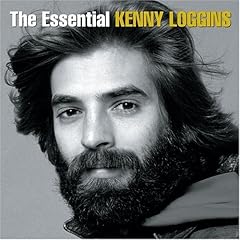
(**this post inspired by an awkward combination of Clerks 2 and a secret desire for Kenny Loggins to be my Silent Bob)
But i know what you're Saying... You're asking how the fuck am i gonna combine my love for smooth 80's jams while simultaneously embrace the season? With just three simple letters my mostly honky friends:
Kenny. Fucking. Loggins.
Loggins and I are keepin' it smooth this Xmas. Then later we might get all fucked up on tequila-nog and cruise for some Mrs. Clauses, ain't that right, Loggins? Those chicks LOVE the beard.
{high fives Loggins}
See, Loggins here knows that this time of year a bearded mutherfucker like him can get some MAD action. C'mon Loggins, let's go hit the food court and mess with the Cinnabun girls...
(**this post inspired by an awkward combination of Clerks 2 and a secret desire for Kenny Loggins to be my Silent Bob)
Friday, December 19, 2008
on running (in the snow)
If i could say just one thing about running 4 miles through a freshly fallen 10 inches of snow, it would be "don't."
Of course i wouldn't listen to me either. So i sauntered into my boots and sweats (yes, for the first time in years, i forwent the token B-ball shorts. Me. The person who NEVER runs in full length pants, no matter the temperature, had to sport the sweats.)
Mile one, westward, was fine. Fun even. I felt like Rocky in Rocky IV. I was probably moving a pace too fast to sustain, but then again i don't get a lot of opportunities to snow-train.
Mile two, southward, times are getting tough. The hills of this route seem to be of no consequence, be them up or down, when you're trudging through this madness. There's definitely 10 inches of snow on the ground but the wind has distributed it such that 25% of the surface is closer to 4 inches deep while another 25% is closer to 18 inches.
Mile three, eastward, and the cold, hard reality sets in: I will die out here. Okay, probably not, but i finally break down and walk sections of this mile. And by "walk" i mean continue my tedious high-step, forward-stumble, but at a slower cadence. It's become important that i stay in the fresh stuff because the few areas that have been disturbed by people have more a packed substance that only has interest in snapping my ankles. Also, mile three has more side streets, meaning more 4ft-tall plow-derived mounds of snow at each intersection. I don't remember most of this mile.
Mile four, northward, turning into the wind. At this point i'm requesting assistance from which ever one of your gods happens to be in the office this afternoon. In return he/she grants me a second and final wind. Every kick into the snow creates a plume of flakes that the wind puts back in my face. Mile four is on a busy, semi-major road, meaning LOTs of driveways and LOTs of snow banks to be climbed. When i AM running i'm pumping my arms so hard and far that it's approaching cartoonish, in a failing attempt to supplement my oh so weary calves, which don't seem to have the will left to keep me bounding out of these drifts. Passing cars appear to be slowing down, either to offer assistance or make a grab for my wallet when i go down... hard to say which but i try to stay moving to detour both.
At some point i round the end of mile four and sprint the short distance back to the cave. I celebrate the success my throwing myself into snow and seriously consider staying there for the night.
I am hurt from running like i haven't been hurt (from running) in a long time. I can't wait for the next time.
Snowed in
It seems the snow-pocalypse is upon us. I shall use this time off work combined with the inability to leave my cave as an opportunity to drop knowledge:
It seems the Sophist will continue to make batteries next year. Although bush is still a dick, he does seem to have settled down in the last few months of his reign. I've seen this exact same thing in a-hole co-workers that are getting ready to leave for a new job. Interesting.
Regardless, things are still looking dicey. Anyone else notice that Chrysler shut down all production with no solid timing for coming back on line?
hmmph
In other news: Scientists read your brain's images. Scientists: Stay away if you know what's good for you
Which leads us to...
Angry three-way sex you never knew you wanted to have:
It's almost time to compile my 2008 year in review. This one's been a little dicier than years past. (Much was learned; many miles accumulated.) Let me see if i can summarize...
Hot tubs, motorcycles and tattoos: Good
Theoretical money, the PO-lice and human emotions: Bad
I'll now spend the day working on my projects. I can't reveal the nature of the work yet, but it involves high voltage and 1940's Russian technology.
(fuck it's snowy out there... might be time for a run)
Saturday, December 13, 2008
haikus
--as inspired by Hank Williams songs--
Fetch me the bar keep
Tell him two shots of happy
Two more of sad
Good times and music
Open eyes for a women
Who i never had
My friends too rowdy,
Saturday night drink too hard.
I was born too boogie.
Thank you, Hank, that'll be all.
Fetch me the bar keep
Tell him two shots of happy
Two more of sad
Good times and music
Open eyes for a women
Who i never had
My friends too rowdy,
Saturday night drink too hard.
I was born too boogie.
Thank you, Hank, that'll be all.
Wednesday, December 10, 2008
Still Strugglin'
Today i had drinks with four people whose common career, though technical in nature, could not be any farther than my own; They might as well have been rocket scientist. New to the group and content to drink my beer, i listened as they lamented over the latest work strife. It would seem the biggest grief lay in the lack of attendance at this year's Christmas party, which the leader of the conversation would chalk up to the social problems of the time.
To be fair, it's not those people's fault that their very existance made me want to flip the table. How could they know that i justed watched a union slow-down exeucted in the midst of economic face-punch? (How can you file grievences against a company that doesn't exist, you short-sited fucks!)
Instead i thought back on the six years since college. I thought about the year of unemployment the four of us shared after returning to our parent's spare bedrooms and the resulting ability to recite the drink specials for every night at every bar within a 10 mile radius. I remembered the 72 hour weeks at the factory in Warren and the 20 hour weeks at the golf course in Taylor. ("really? an electrical engineering degree? what are you doing working at a golf course?") And i thought about how happy i was when i finally dug my to this job.
But mostly, while drinking my beer, i thought about the lay-offs; How many coworkers has it been? Could i remember all their names? (no) Not all of their faces were as vivid as Joe's, who, after all had a family. It wouldn't have been so bad if the boss hadn't TOLD me he layed off Joe so i could stay. I mean, three rounds of lay-offs this year/job alone... they start to all blurr together.
From Ohio... I thought about Chicago
Fuck it. Here's to Detroit; my unemployed and underemplyed co-horts. Teachers and engineers, public relationists and electricians:
Here's to a LOT of Labatt Blue after another day at a shitty job:
Here. Is to the struggle:
--A. Sophist
(Update: if you're not drunk yet, read this. It is perfect.)
Monday, December 08, 2008
"i see a tit tat on the gold digger"
Step one: Read this article (tip of the hat to hollysaurus)
let it *really* sink in there.
ah yes.
It's hard pin point my favorite part of this article on lottery winning... is it the "tit tat" reader comment after the article or actualy seeing the tattoo-adorned boob? Is it the way god filled the multi-million-dollar shaped hole in his soul?
Or maybe it's the way he still spends those 10 dollars a day on the lottery that makes me want to laugh/cry.
He is an inspriation to us all!
Note to self:
1) win lottery (one time equivalent to $82k/yr for 60 yrs)
2) (does more math) Marry 16.1 yr old single mother
3) profit
Saturday, December 06, 2008
good times/bad times

Friday, December 05, 2008
Saturday, November 22, 2008
"Once you leave the edge, you're happy"
"...the stress comes while you're waiting, before you go. Once you start to act, it all happens by itself."
(If embedded video is missing, go here)
Can you imagine feeling more alive?
************
Unrelated news: I recommend the Trick Trick Album.
(If embedded video is missing, go here)
Can you imagine feeling more alive?
Unrelated news: I recommend the Trick Trick Album.
Wednesday, November 19, 2008
illin'
i will defeat the sickness with my robot choke slam
in the mean time, here are some clips of the animation, circa 2004, Ann Arbor.
in the mean time, here are some clips of the animation, circa 2004, Ann Arbor.
Sunday, November 16, 2008


Subscribe to:
Posts (Atom)